
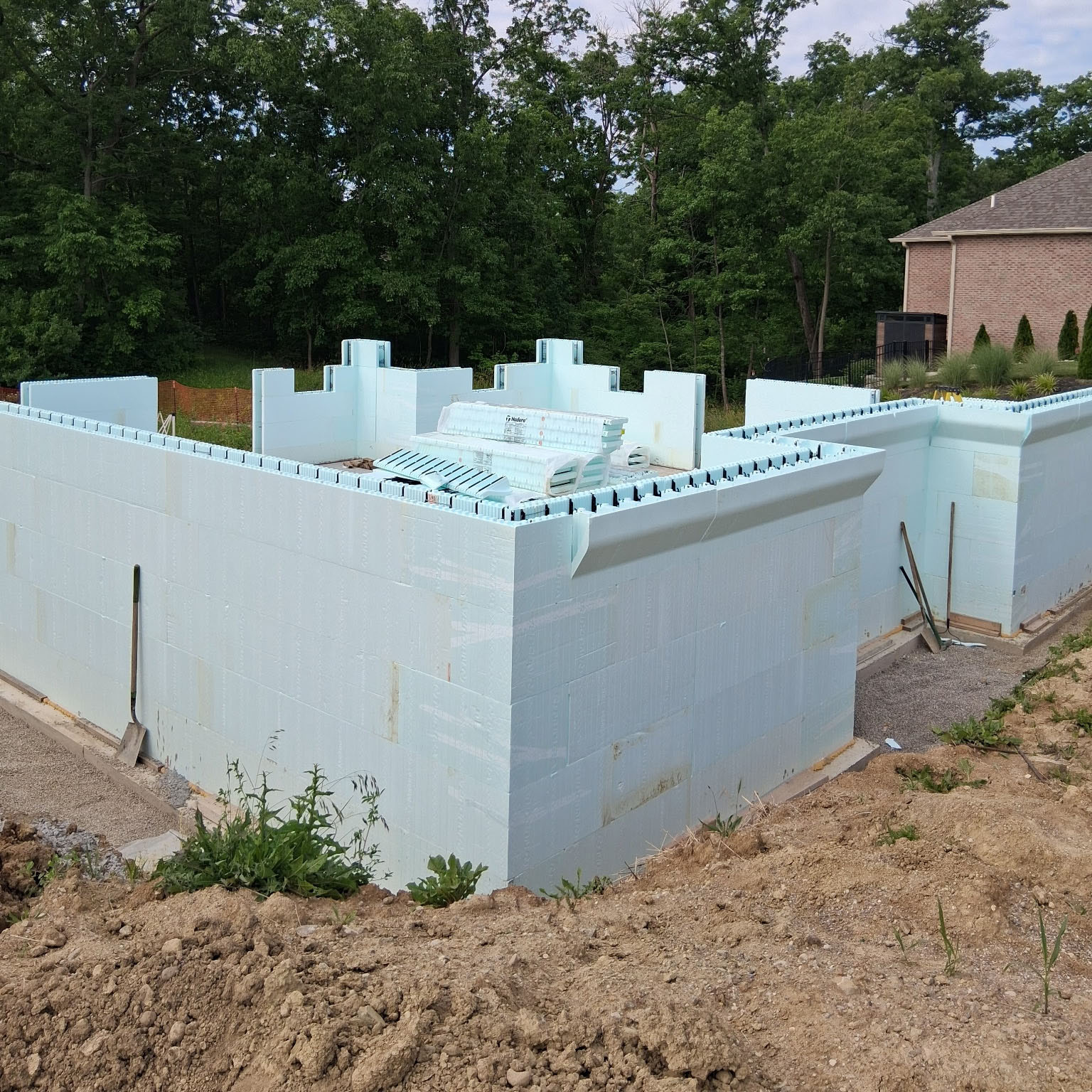
What is ICF?
ICF stands for Insulated Concrete Forms. These are interlocking, LEGO-like foam blocks used to build walls for commercial and residential construction. The blocks are stacked to form the wall shape, then reinforced with rebar and filled with concrete.
ICF buildings are often compared to European-style construction (using masonry blocks), though ICF systems are typically far faster and easier to assemble than traditional block work because the foam stays in place as insulation.
Benefits of using ICF
- Excellent insulation and sound control: The foam on both sides of the wall provides strong thermal performance and helps absorb noise.
- Fire and weather resistance: The concrete core adds durability, fire protection, and resistance to harsh weather conditions.
- Lower heating and cooling costs: Because the envelope is more efficient, operating costs are often reduced versus traditional systems.
- Improved indoor comfort and moisture control: The building envelope is tighter, which can help with humidity/mold prevention when properly detailed.
- Enhanced security: In law enforcement and military facilities, the concrete core walls provide added protection against bullets and help mitigate damage from vehicle intrusion.
- Faster construction (with the right contractor): Projects can move quickly when using experienced ICF installers.
Challenges of working with ICF
- Limited flexibility after the concrete is poured: Changes to structural elements can be difficult once the concrete is in place—so it’s important to have an experienced design team and clear coordination up front.
- Cost: ICF can cost slightly more than conventional wood-framed construction (depending on location and market conditions).
- Finding experienced contractors: ICF work requires familiarity with the system. Many manufacturers help address this through training, installation manuals, and sometimes free workshops/samples.
ICF project types
We support owners on both new residential and commercial projects. We’ve noticed that once an owner builds with ICF, it often becomes their preferred system for future work. We’ve also helped owners who started with traditional wood-framed drawings and later needed conversion to ICF construction.
Our thoughts
ICF structures tend to be heavier, which can make certain architectural expressions more challenging from a design standpoint. They’re sometimes described as bulky, but that perception can be influenced by detailing, proportions, and exterior design choices.
Overall, we believe ICF is worth serious consideration because it typically delivers superior performance—especially in comfort, energy efficiency, and durability—when designed and installed correctly.